Overview
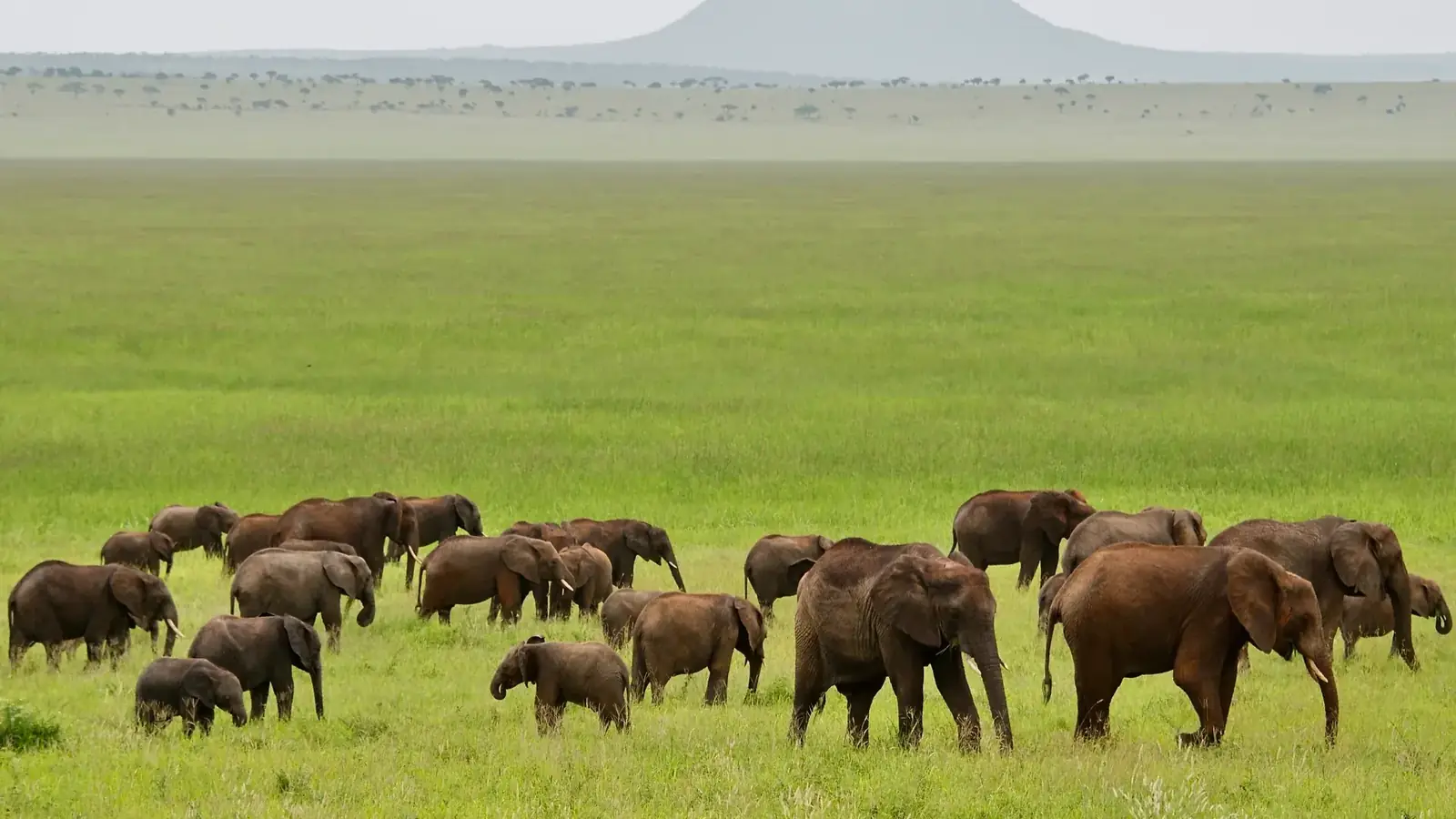
The Serengeti National Park is, by many measures, the world's finest wildlife destination. A UNESCO World Heritage Site covering 14,763 square kilometres of open savannah, acacia woodland, and rocky kopje outcrops in northern Tanzania, it is the stage for the southern section of the Great Wildebeest Migration and home to extraordinary populations of lion, leopard, cheetah, elephant, and virtually every major East African wildlife species.
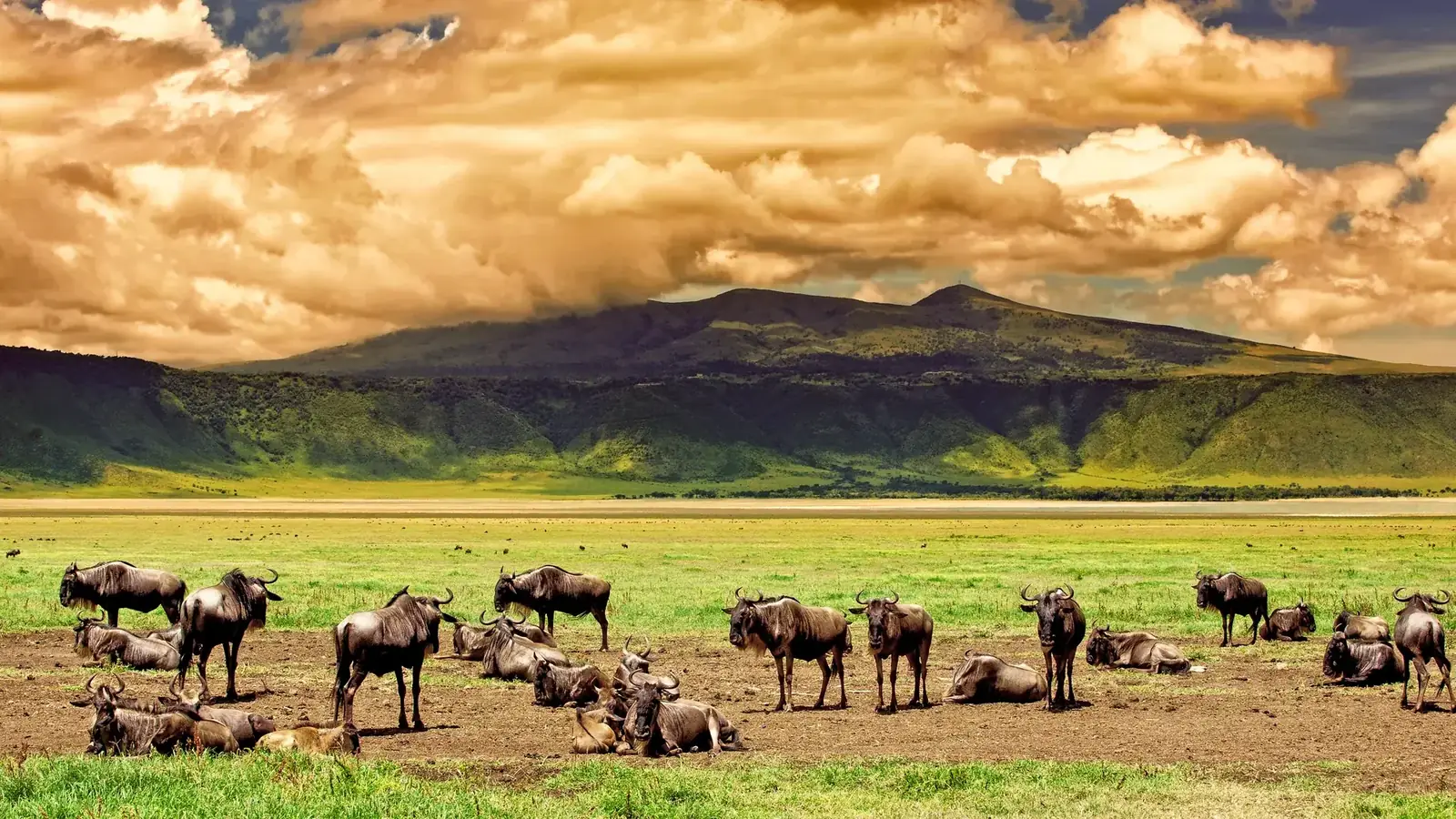
The Serengeti's name comes from the Maasai word Siringet, meaning 'endless plains' — an apt description of a landscape so vast and so flat that the horizon seems to extend indefinitely. The sky is enormous here: dawn light across the Serengeti is among the most visually extraordinary experiences that Africa offers, and the golden hour game drive — when the early morning light illuminates acacia trees and silhouettes wildlife against the horizon — is one of the most celebrated sensory experiences in wildlife travel.
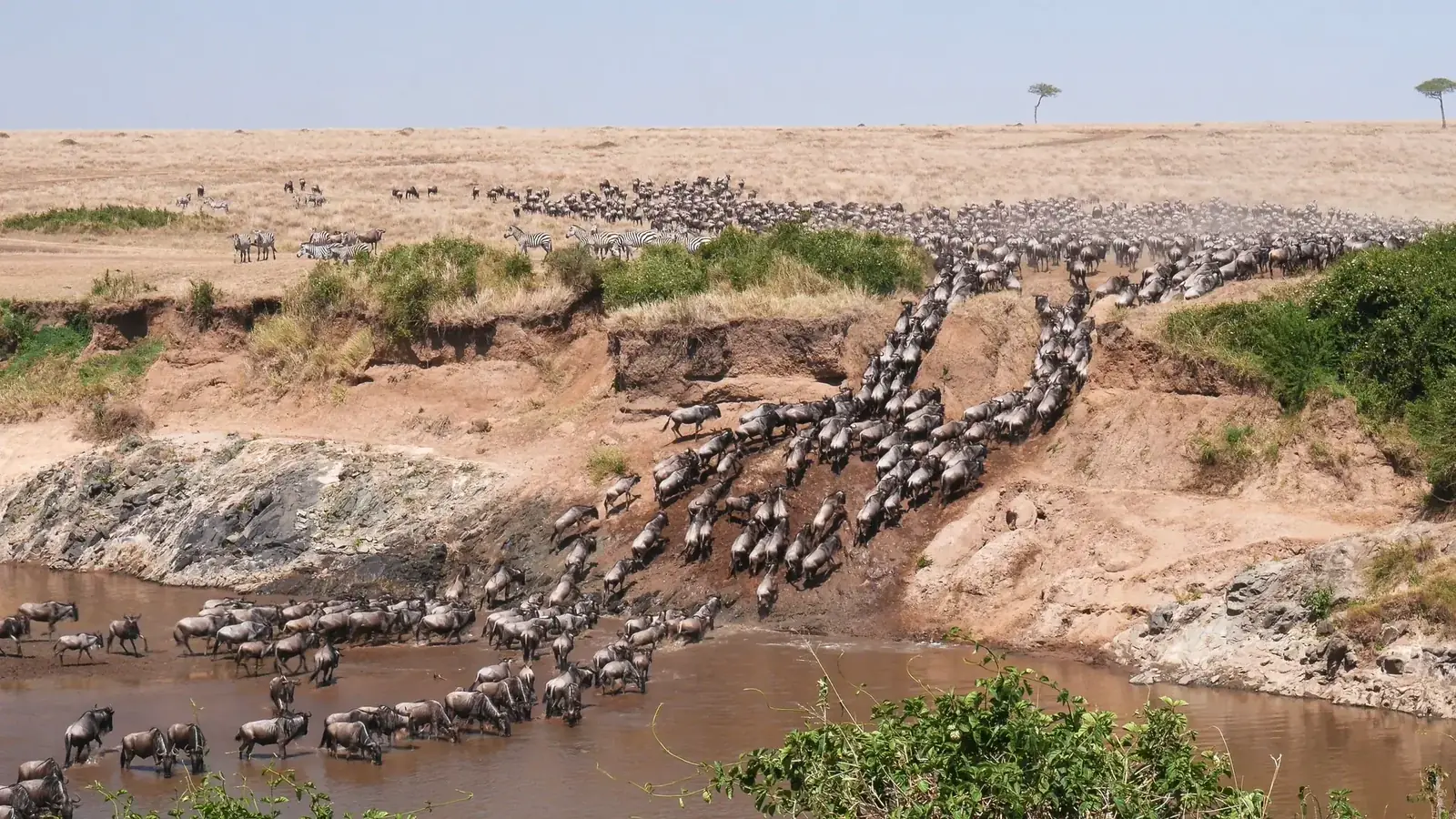
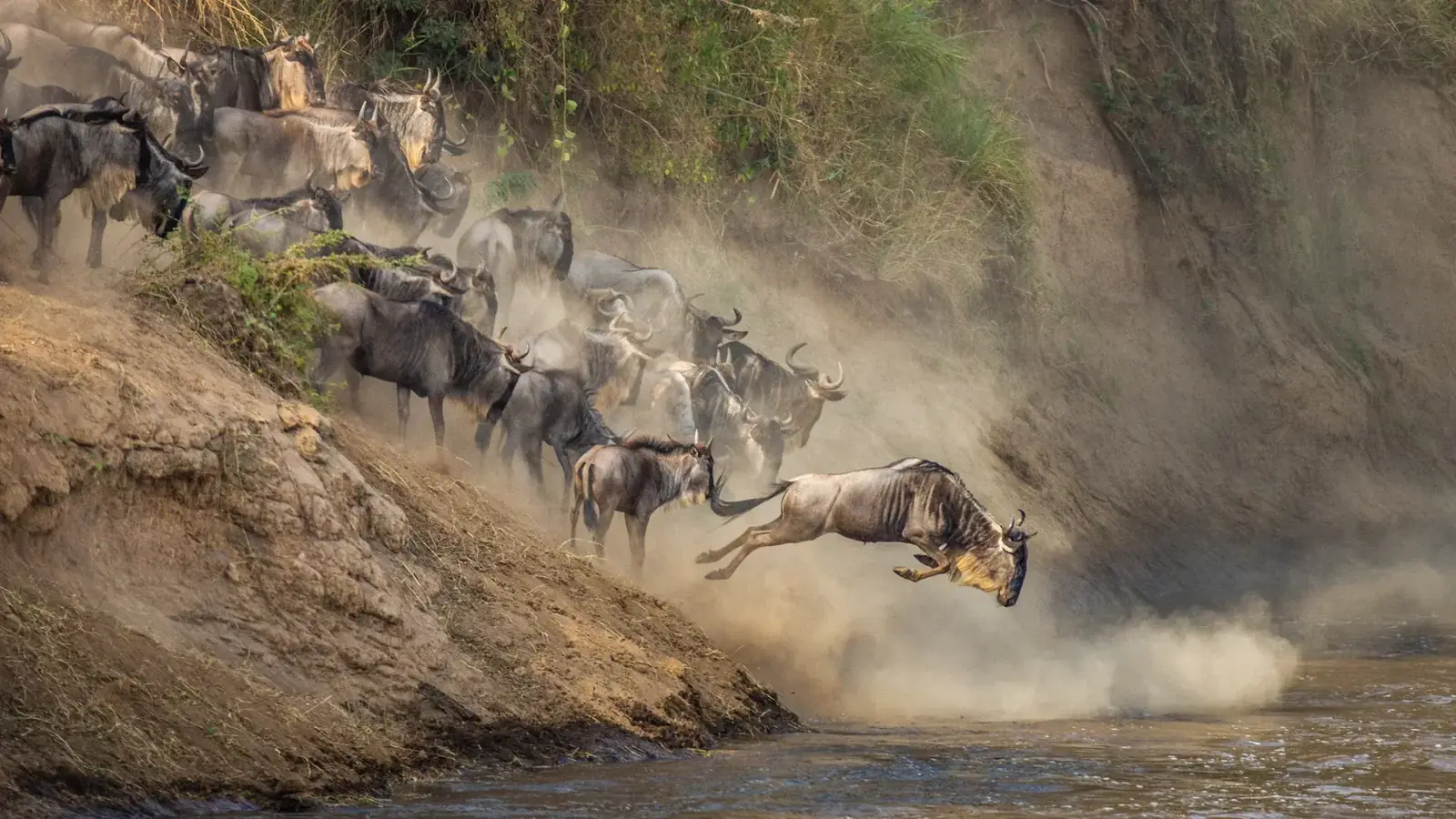
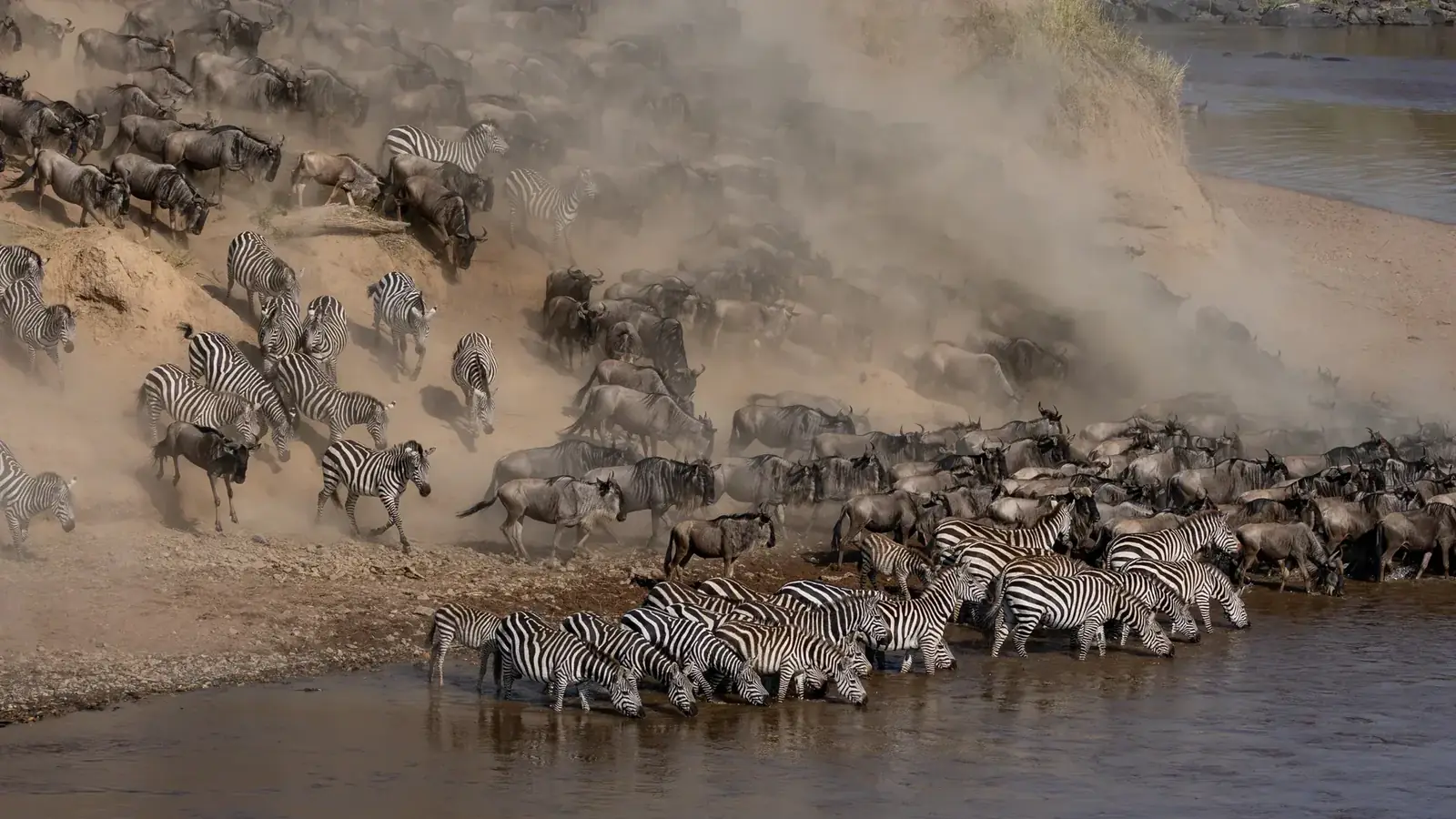
The migration cycle within the Serengeti follows a roughly annual pattern: the calving season on the southern Serengeti plains between January and March, when 500,000 wildebeest calves are born in an extraordinary concentrated burst of new life; the northward movement through the western corridor between April and June; the arrival of the herds in the northern Serengeti near the Mara River between July and September, where dramatic river crossings into Kenya's Maasai Mara occur; and the southward return between October and December. Each phase of the migration occupies a different part of the ecosystem and offers a different experience.
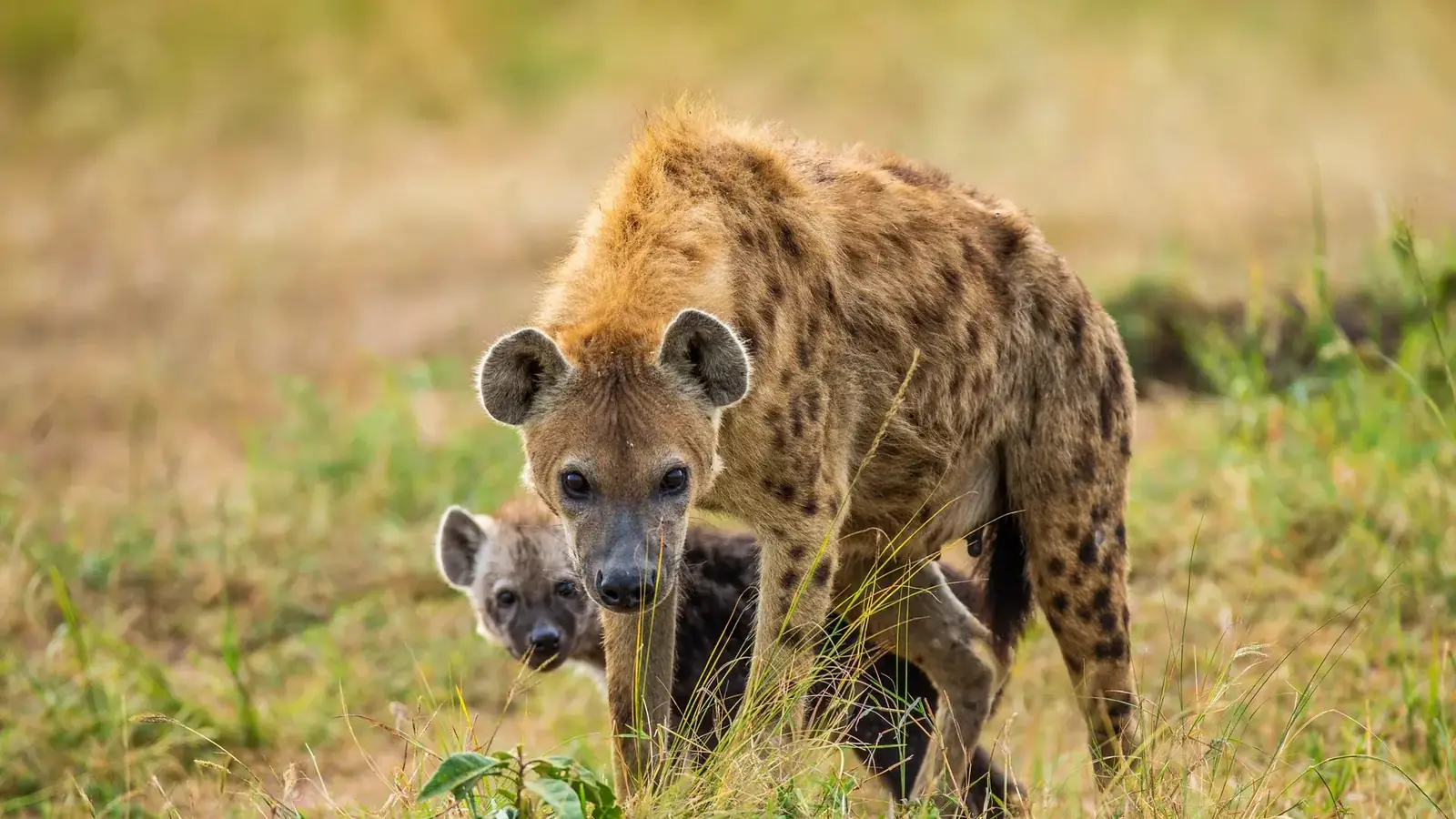
The Serengeti's lion population is among the most studied in the world — and the most visible. The Seronera region in the central Serengeti is particularly famous for its lion prides and resident leopards, and remains the best area for year-round predator sightings regardless of the migration's current position.
Signature Experiences
Best Time to Visit
The Serengeti has no single 'best time' — it depends entirely on what aspect of the migration or wildlife you prioritise. January–February is world-class for the calving season on the southern plains. June–July sees the western corridor's Grumeti River crossings. July–October brings the northern Serengeti's Mara River drama. November–December is the shoulder season with the short rains — beautiful landscapes, fewer visitors, competitive rates.
Key Areas & Sub-Destinations
Practical Tips
Migration camp positioning changes seasonally to follow the herds — we work with camps that move their tented structures accordingly to keep guests as close to the action as possible. Private concessions north of the national park boundary permit off-road driving and night drives. Most visitors fly into the Serengeti via charter flights from Kilimanjaro (JRO) or Arusha airports.
Best For
→ Plan your Serengeti National Park journey — submit an enquiry to receive a tailor-made proposal.
The Maasai Mara destination write-up appears in the Kenya section (Destination 11 above) and covers the full editorial treatment of the Mara as a sub-destination of Kenya. Please refer to that section for the complete content.
How to plan Serengeti National Park
The Serengeti has no single 'best time' — it depends entirely on what aspect of the migration or wildlife you prioritise. January–February is world-class for the calving season on the southern plains. June–July sees the western corridor's Grumeti River crossings. July–October brings the northern Serengeti's Mara River drama. November–December is the shoulder season with the short rains — beautiful landscapes, fewer visitors, competitive rates.
Southern Serengeti — calving grounds, open plains, cheetah territory, Seronera Central — permanent game year-round, lions and leopards, Western Corridor — Grumeti River crossings, hippo pools, less visited, Northern Serengeti — Mara River crossings, migration drama, closest to Kenya
Migration-focused wildlife enthusiasts, Wildlife photographers, Couples and honeymooners in luxury tented camps, First-time Tanzania safari visitors, Experienced safari travelers wanting migration depth
- Calving season game drives (January–March) — 500,000 wildebeest calves born in six weeks
- Northern Serengeti Mara River crossings (July–October)
- Hot air balloon safari at dawn over the Serengeti plains
- Seronera central Serengeti — year-round lion and leopard sightings
- Kopje rock formations — caracal, rock hyrax, and raptors
- Western Corridor — hippo pools, topi, and the migration crossing the Grumeti River
- Night drives from private concession camps north of the National Park
- Walking safaris from mobile migration camps
- Cheetah mother-with-cubs sightings on open plains